


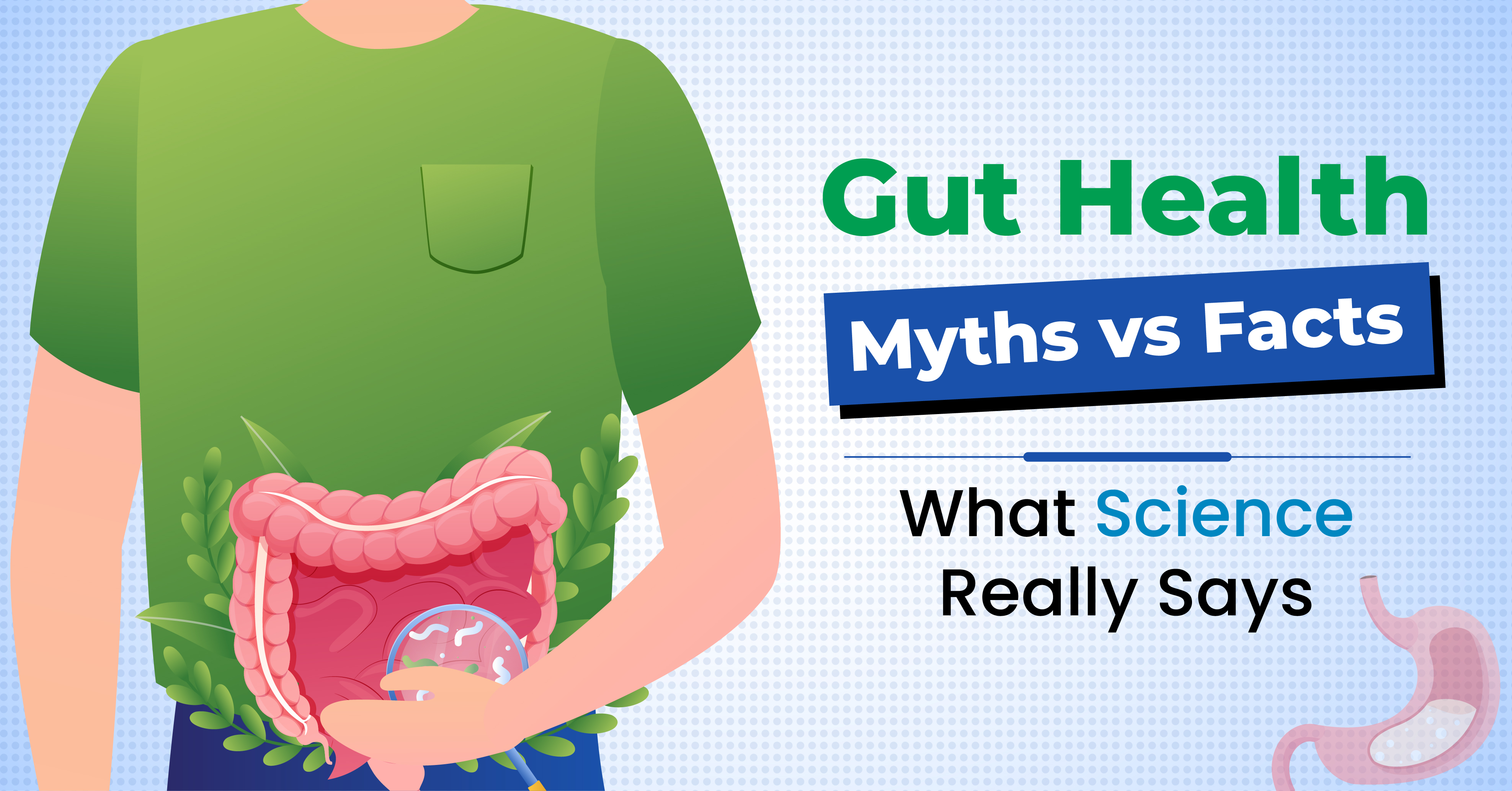
Gut health plays a crucial role in digestion, immunity, and overall well-being, yet it is surrounded by widespread myths and misinformation. Many beliefs about probiotics and digestion are oversimplified or misunderstood. Science shows that gut health depends on balance, consistency, and individual needs rather than quick fixes. This article breaks down common gut health myths and explains the facts backed by scientific understanding.
Gut health refers to the balance and function of microorganisms living in the digestive tract. These microorganisms, collectively known as the gut microbiome, influence digestion, nutrient absorption, immune response, and even mental well-being. A healthy gut supports smooth digestion, regular bowel movements, and protection against harmful pathogens.
Poor gut health can lead to digestive discomfort, bloating, irregular stools, fatigue, and reduced immunity. Understanding what truly supports gut health helps avoid confusion caused by misleading claims and trends.
The gut microbiome consists of trillions of bacteria, viruses, and fungi. Beneficial bacteria help break down food, produce vitamins, and maintain the gut lining. Harmful bacteria exist as well, but problems arise only when they outnumber beneficial microbes.
Balance is the key. Diet, stress, illness, medications, and lifestyle habits continuously influence this balance. Science shows that gut health is dynamic, meaning it changes based on daily choices rather than remaining fixed.
This is one of the most common misconceptions. In reality, beneficial bacteria are essential for digestion and immune function. Eliminating bacteria completely would harm health rather than improve it.
Many people believe that taking a probiotic supplement for gut health will fix digestive issues overnight. However, probiotics support gradual balance and require consistent use along with healthy habits.
There is no single best probiotic for digestion that works for everyone. Gut microbiomes differ based on age, diet, health conditions, and lifestyle, meaning probiotic needs vary between individuals.
Taking excessive amounts of probiotics does not necessarily improve gut health faster. Overuse may cause temporary bloating or discomfort. Balance and appropriate dosage matter more than quantity.
Scientific studies show that gut bacteria influence immune response, inflammation, mood regulation, and metabolic health. This is due to the gut-brain and gut-immune connections.
While supplements help, everyday food choices play a bigger role in shaping gut bacteria. Fiber-rich foods nourish beneficial microbes and help maintain diversity in the microbiome.
A gut health probiotic supports microbial balance, but it cannot compensate for poor diet, chronic stress, or irregular sleep patterns. Probiotics work best as part of a holistic approach.
Probiotics are live beneficial bacteria that help restore and maintain gut balance. A probiotic bacteria supplement supports digestion by improving nutrient absorption, regulating bowel movements, and strengthening the gut barrier.
Probiotics are especially useful after antibiotic use, digestive infections, or periods of stress that disrupt gut flora. A probiotic medicine for digestion helps replenish beneficial bacteria that may have been depleted.
Different probiotic strains serve different purposes. Some support digestion, others reduce bloating, while some strengthen immunity. This is why strain selection matters more than marketing claims.
Not all probiotics are the same. Some are designed to support digestion, while others target immunity or recovery after illness. Choosing based on digestive needs leads to better outcomes.
Scientific evidence supports specific strains for digestive balance. A well-formulated probiotic supplement for gut health contains strains studied for digestive support rather than generic blends.
Probiotics are not quick remedies. Regular intake over time allows beneficial bacteria to colonize the gut and support long-term balance.
Dietary fiber feeds beneficial gut bacteria. Low-fiber diets reduce microbial diversity and weaken gut function. Including whole grains, fruits, and vegetables supports digestion naturally.
Chronic stress alters gut bacteria composition and increases digestive sensitivity. Managing stress supports healthier digestion and improves probiotic effectiveness.
Poor sleep and inactivity negatively affect gut health. Regular movement and consistent sleep schedules help maintain microbial balance and digestive efficiency.
Digestive disturbances such as bloating, irregular bowel movements, or frequent stomach discomfort may indicate gut imbalance. Antibiotic use, infections, and dietary changes can disrupt gut bacteria.
In such cases, a probiotic medicine for digestion can help restore balance and support recovery. Probiotics are also helpful during travel, dietary transitions, or periods of high stress.
Probiotics support balance while being consumed, but long-term gut health depends on consistent habits and diet.
The best option depends on individual digestive needs and the probiotic strains used.
Some people may experience mild bloating initially, which usually resolves as the gut adjusts.
Many people take probiotics for several weeks or months, especially during digestive stress or recovery periods.
Gut health is often misunderstood due to myths and oversimplified claims. Science shows that gut balance depends on consistent habits, dietary choices, and appropriate support rather than quick fixes. Probiotics play a valuable role in supporting digestion and restoring microbial balance, but they work best alongside healthy lifestyle practices. By understanding the facts and avoiding common myths, it becomes easier to support long-term gut health in a safe, informed, and sustainable way.
 Jul 22, 2026
 Jul 15, 2026
 Jun 15, 2026
 Jun 01, 2026
 Apr 25, 2026
Stay in the Loop! Sign up for our Newsletter and be the first to receive health tips, exclusive offers, and updates on Eco-ALL. Your journey to well-being starts here!"

There are many variations of passages of Lorem Ipsum available, but the majority have suffered
alteration in some form.