


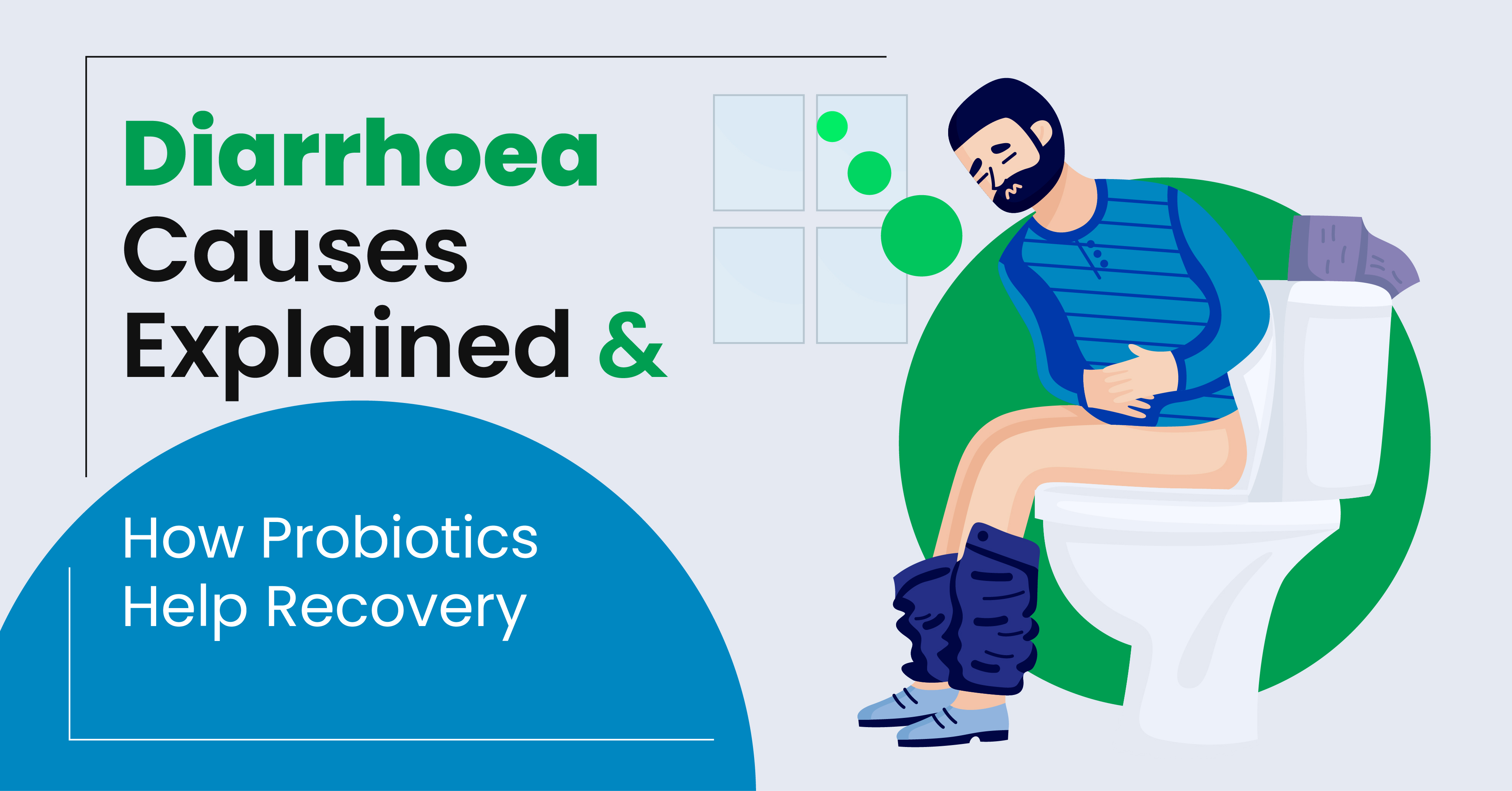
Diarrhoea is a common digestive condition marked by frequent, loose, or watery stools. It can occur due to infections, food intolerance, stress, or imbalance in gut bacteria. Probiotics help recovery by restoring healthy gut flora, supporting digestion, and strengthening the gut's natural defense. This guide explains why diarrhoea happens and how probiotic support can aid faster and safer recovery.
Diarrhoea is a digestive condition characterized by frequent bowel movements with loose, watery stools. It may last for a short period, known as acute diarrhoea, or continue for weeks, which is classified as chronic diarrhoea. Along with loose stools, symptoms may include abdominal cramps, bloating, urgency, dehydration, and weakness.
While occasional diarrhoea is common and often resolves on its own, repeated or prolonged episodes can affect nutrient absorption and overall health. Understanding its causes is important for effective and timely recovery.
One of the most common causes of diarrhoea is infection caused by bacteria, viruses, or parasites. Contaminated food or water can introduce harmful microorganisms into the digestive tract, leading to inflammation and loose stools. In such cases, the gut microbiome is often disrupted.
Antibiotics kill harmful bacteria but may also destroy beneficial gut bacteria. This imbalance can trigger antibiotic-associated diarrhoea. Restoring gut flora becomes essential during and after antibiotic treatment.
Some individuals experience diarrhoea due to lactose intolerance, gluten sensitivity, or difficulty digesting certain foods. When the digestive system cannot properly process food, it results in irritation and loose motion.
The gut and brain are closely connected. Emotional stress can speed up intestinal movement, leading to stress-related diarrhoea. This is commonly seen in people with sensitive digestion.
Conditions such as irritable bowel syndrome (IBS), inflammatory bowel disease (IBD), or stomach infections can cause recurring diarrhoea. These conditions often involve chronic gut imbalance.
The digestive system contains trillions of beneficial bacteria that help break down food, absorb nutrients, and protect against harmful microbes. This ecosystem is known as the gut microbiome.
When the balance of good and bad bacteria is disturbed, digestion becomes inefficient. Harmful bacteria may dominate, causing inflammation and poor stool consistency. Diarrhoea is often a sign that this balance has been disrupted.
Probiotics are live beneficial microorganisms that support gut health when consumed in adequate amounts. They help replenish healthy bacteria in the digestive tract and restore microbial balance.
A probiotic for diarrhoea works by competing with harmful bacteria, improving digestion, and supporting the gut lining. Probiotics also help regulate bowel movements and improve stool consistency during recovery.
Probiotics play a supportive role in managing diarrhoea by addressing its root cause rather than just symptoms. A probiotic suspension for loose motion is often used because it is easy to consume and absorbs quickly.
Probiotics help shorten the duration of diarrhoea, reduce stool frequency, and improve gut resilience. They also support faster recovery from stomach infections by strengthening the digestive system's natural defenses.
Certain strains, such as bacillus clausii probiotic, are known for their stability and ability to survive harsh stomach conditions. These strains help restore gut flora even during active diarrhoeal episodes.
A liquid probiotic for diarrhoea is commonly recommended for children and adults who have difficulty swallowing tablets. Liquid forms allow faster absorption and are gentle on the stomach.
Spore-forming strains, including bacillus clausii probiotic, are resistant to heat and stomach acid. This makes them effective during digestive disturbances and antibiotic use.
A probiotic medicine for stomach infection is often used alongside oral rehydration and dietary care. These probiotics help rebuild gut flora and reduce recurrence.
Each probiotic strain works differently, so choosing the right type depends on the cause and severity of diarrhoea.
Probiotics are especially useful in cases of antibiotic-associated diarrhoea, travel-related diarrhoea, and mild stomach infections. They are also helpful during recovery, even after symptoms begin to improve.
Early use of probiotics can prevent further gut imbalance and support faster normalization of bowel movements. Regular intake during digestive stress helps maintain gut stability and comfort.
While probiotics aid gut recovery, additional supportive measures improve outcomes. Staying hydrated is essential to prevent dehydration caused by fluid loss. Oral rehydration solutions help replace lost electrolytes.
Eating light, easily digestible foods supports the digestive system during recovery. Avoiding oily, spicy, or processed foods reduces irritation and allows the gut to heal.
Rest is equally important, as the body needs energy to fight infection and restore balance. Combining probiotics with proper hydration, nutrition, and rest leads to smoother recovery.
Probiotics help restore gut balance and may reduce the duration and severity of diarrhoea, but recovery also depends on the underlying cause.
Yes, probiotics are generally safe and commonly used during diarrhoea to support gut health and recovery.
Probiotics are often continued for a few days to weeks after symptoms resolve to ensure gut balance is fully restored.
Yes, probiotics support gut flora during stomach infections and help reduce digestive discomfort during recovery.
Diarrhoea is a common digestive issue with multiple causes, including infections, antibiotics, stress, and gut imbalance. Probiotics play an important role in recovery by restoring healthy gut bacteria, improving digestion, and supporting the body's natural defenses. Whether used as a probiotic for diarrhoea, a probiotic suspension for loose motion, or a liquid probiotic during stomach infection, these beneficial microbes help promote faster and more balanced digestive recovery. With proper care, hydration, and probiotic support, gut health can be restored safely and effectively.
 Jul 22, 2026
 Jul 15, 2026
 Jun 15, 2026
 Jun 01, 2026
 Apr 25, 2026
Stay in the Loop! Sign up for our Newsletter and be the first to receive health tips, exclusive offers, and updates on Eco-ALL. Your journey to well-being starts here!"

There are many variations of passages of Lorem Ipsum available, but the majority have suffered
alteration in some form.